


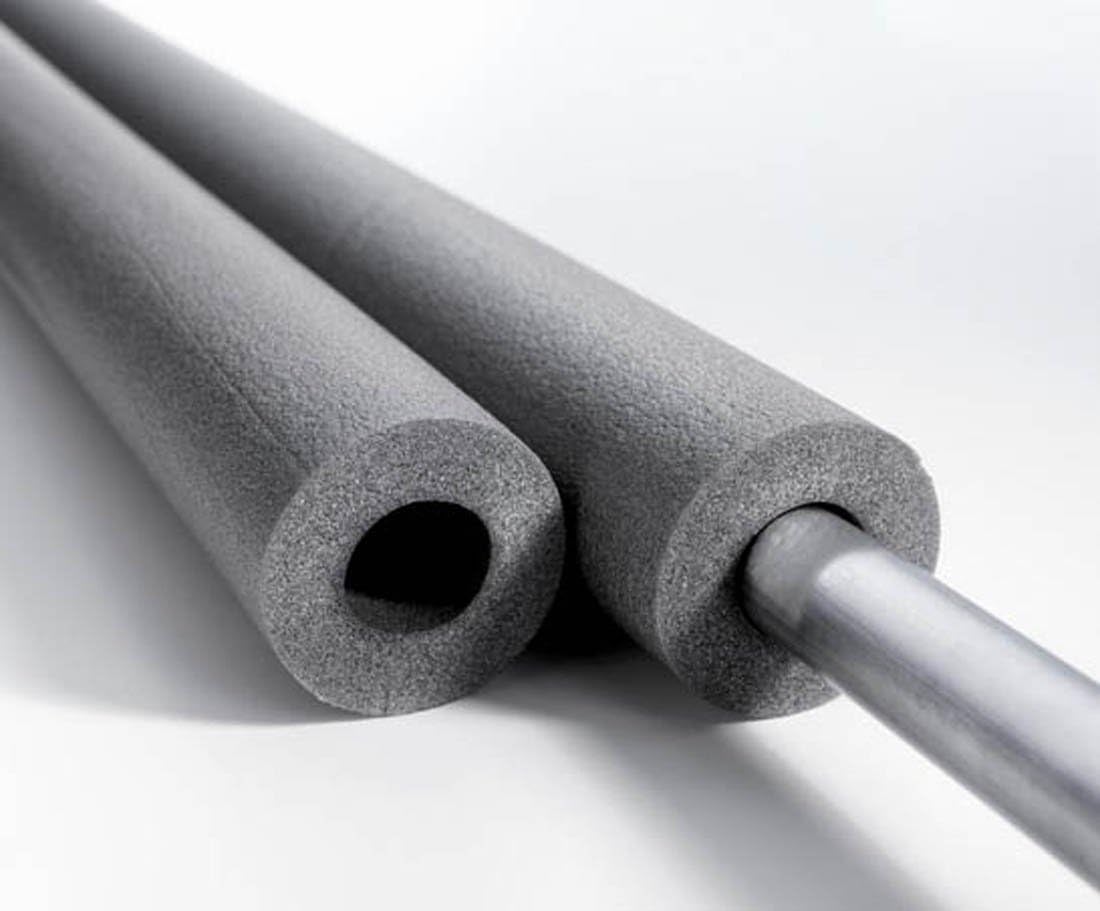
Description
- Climaflex Branded Pipe Insulation
- Improved Thermal Conductivity (0.034 W/mK at 0°c.)
- Totally CFC & HCFC Free
- Closed Cell Polyethylene foam (Class E Fire Rating Combustible Material)
- Ideal for thermal insulation of pipe work in domestic situations
- Hygienic Product: rot-proof; odourless and non hygroscopic. Will not sustain vermin and will not encourage growth of fungi or mould. Also resistant to oil and grease.
- Slit to one side for easy application.
- Pipe insulation protects your water pipes from frost and also is used for insulating hot water pipes to prevent heat loss.
Technical Specification
- Pipe Diameters (OD, outside pipe diameter) 15mm
- Insulation Thickness 13mm
- Temperature Range -50 to 95 degrees centigrade
- Insulation Lengths 1m
- Thermal conductivity 0°c – 0.034 W/mK; 20°c – 0.036 W/mK; 40°c – 0.039 W/mK;: DIN 52613
- Thermal Transmittance U-Value 2.20 W/m2K
- Climaflex meets the ‘W35’ category for water regulations
See how you can save extra money by visiting our interactive energy saving house here
Why use pipe insulation?
Energy Conservation
Pipe insulation is also very important for keeping heat in the pipes and ensuring that it is conveyed to its destination without excessive heat loss. Pipes may run through cold spaces such as garages and roof voids where you don’t want heat loss into these spaces as this will make the heating system less efficient. There is also a good reason to insulate heating pipes running through heated spaces to prevent overheating of rooms within properties. This way heat is delivered directly to the radiators with thermostatic controls in habitable rooms without excessive losses in circulation areas. In larger buildings secondary hot water circulation and heating pipes must be insulated to prevent overheating in corridors where pipes are often located as this greatly improves the efficiency of the system especially where the hot water heating boiler may not be as efficient as the space heating boiler. Rule of thumb – the bigger the pipe diameter the thicker the insulation should be for effective insulation.
Energy Conservation applications:- Insulation all pipes in garages and roof voids or other unheated spaces, prevention of overheating by insulating pipes within the building.
Frost Protection
Winter usage of pipe insulation is to protect pipes against frost damage. All types of pipe can be affected by frost damage, in particular metal pipes such as copper, lead and steel which will readily split upon freezing due to the expansion of freezing water when ice occurs. When ice bursts a pipe, upon thawing significant damage occurs due to water supply flooding or emptying of the heating system. As a rule of thumb the thinner the pipe diameter the thicker the pipe insulation should be.
Frost protection applications:- external pipes, all loft space pipe work serving tanks or hot/cold and heating water pipes.




Reviews
There are no reviews yet.